In this story11 sections
- Why a 15-digit IMEI decides whether a used phone is a bargain or a burden
- How to find IMEI number using *#06#, settings and the box
- What the Know Your Mobile service on Sanchar Saathi actually checks
- Three ways to check IMEI on Sanchar Saathi: SMS, website and app
- Valid, blacklisted or duplicate: reading the KYM reply
- How to check second hand phone is stolen on OLX, Cashify and the local market
- Buying used phone without bill: legal risk in India and the IMEI law
- How to block lost phone IMEI on CEIR portal, and unblock it later
- The Sanchar Saathi app mandate that never was, plus Chakshu and TAFCOP
- A ten-minute checklist before you pay for a second-hand phone
- Frequently asked questions
Picture the scene: the phone looks perfect, the price is, say, ₹6,000 below the shop rate, and the seller on the bus stand bench is in a hurry. Before you hand over the cash, spend thirty seconds to check IMEI on Sanchar Saathi, the Department of Telecommunications portal that tells you whether a handset is registered as genuine, flagged as lost or stolen, or sharing its identity with another device. The steps below were current when we checked in early November 2026.
| Item | Details |
|---|---|
| What | Know Your Mobile (KYM) IMEI check on Sanchar Saathi, plus CEIR blocking for lost or stolen phones |
| Who it affects | Anyone buying, selling or losing a mobile phone in India |
| How to check | SMS "KYM <15-digit IMEI>" to 14422, the Sanchar Saathi website, or the Sanchar Saathi app on Android and iOS |
| Key dates | Pre-installation order for the app withdrawn on 3 December 2025; telecom cyber security amendment rules notified on 22 October 2025 |
| Official source | sancharsaathi.gov.in (CEIR now at ceir.sancharsaathi.gov.in) |
| What to do | Check every IMEI on the phone before paying, match it with the box and bill, and keep the seller's details |
Why a 15-digit IMEI decides whether a used phone is a bargain or a burden
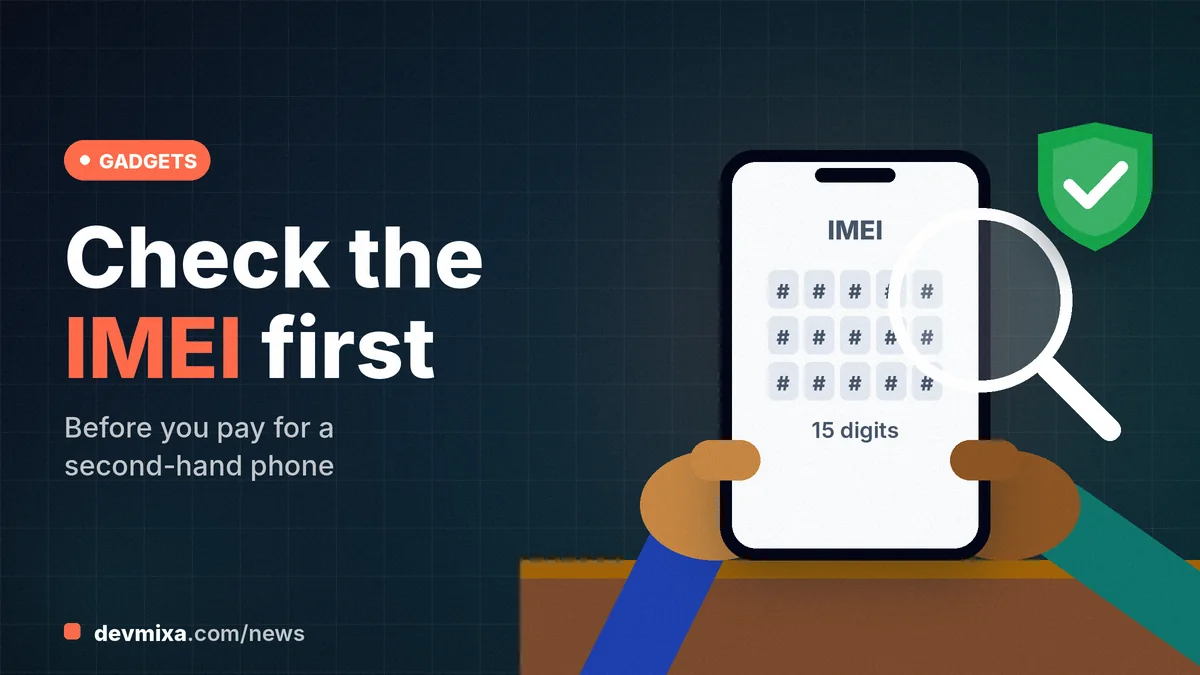
An IMEI is the 15-digit serial number that identifies one physical handset to every mobile network, and it is the single best clue to a used phone's past. Your SIM card says who you are. The IMEI says which device you are holding. When a phone is reported lost or stolen in India, it is this number, not the SIM, that gets flagged in a national register so the handset stops working on Indian networks.
It works like the chassis number on a used motorcycle: the paint tells you nothing, while the number stamped on the frame tells you whether the bike has a clean record or a police file. A stolen phone can be wiped, given a new case and sold with a confident smile, but its IMEI usually carries the history with it.
That matters for three reasons. First, a flagged handset may lose network service soon after you buy it, leaving you with an expensive music player. Second, you could be questioned if police trace the device to you. Third, a phone whose identity has been tampered with, sometimes called a cloned IMEI, is illegal to use and may be unsafe in other ways.
How to find IMEI number using *#06#, settings and the box
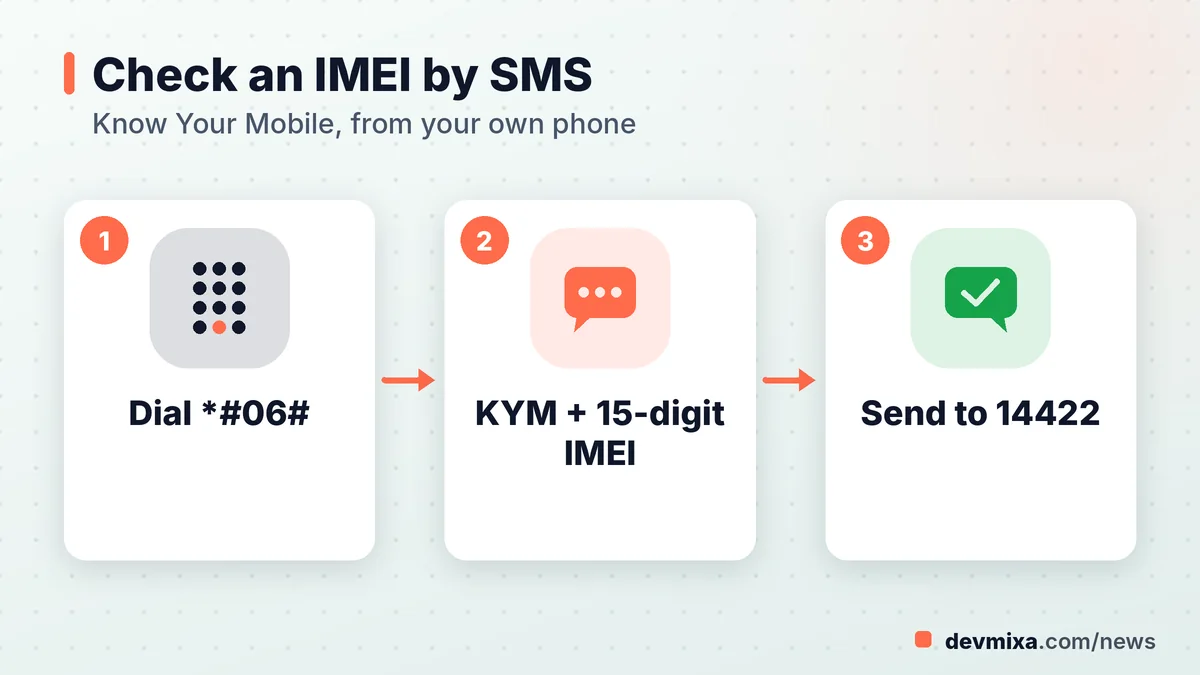
The fastest route: open the phone dialler, type *#06#, and the IMEI appears on screen without pressing call. On Android you can also open Settings, then About phone, and look for IMEI. On an iPhone, go to Settings, General, About.
Two SIM slots mean two numbers
Every dual SIM phone has two IMEIs, one for each slot, and *#06# usually shows both. Note the second IMEI as carefully as the first, because a seller could have one slot flagged and hope you only check the top line.
Make the screen, box and bill agree
Next, compare what the screen shows with the box IMEI sticker and the purchase invoice. All three should carry the same numbers, digit for digit. Phone, box and bill are three witnesses to one story; if one tells a different version, start asking questions. If the box says one thing and the screen says another, the box may belong to another handset, or the software IMEI may have been altered. In either case, the safest move is to walk away or insist on an explanation you can verify.
What the Know Your Mobile service on Sanchar Saathi actually checks
Know Your Mobile, shortened to KYM, is a free Sanchar Saathi service that looks up an IMEI in government records and tells you its status along with the brand and model registered against it. The Department of Telecommunications (DoT) urged citizens to use KYM in a November 2025 advisory that warned against IMEI tampering.
Here is what KYM can and cannot do. It can tell you whether the number is recognised, whether it has been blacklisted after a loss or theft report, and whether it appears to be shared with other devices. It shows the brand, model and manufacturer on record, which you can compare with the phone in your hand.
What it cannot do is inspect the hardware. KYM checks a number, not the circuit board. If a counterfeit phone has been loaded with a genuine IMEI copied from a real device, the lookup may come back clean while the device is still a clone. So can KYM tell if a phone is a fake or clone model? Partly. A mismatch between the model on record and the phone you are holding is a clear warning, but a perfect match is only one piece of evidence. Treat a clean result as a green light at a junction, not as a guarantee that the road ahead is empty.
Three ways to check IMEI on Sanchar Saathi: SMS, website and app
You can check IMEI on Sanchar Saathi in three ways: by SMS to 14422, on the sancharsaathi.gov.in website, or inside the Sanchar Saathi app. All three use the same records, so pick whichever suits the moment.
The KYM SMS 14422 IMEI check format
The format is short: type KYM, a space, and the 15-digit IMEI, then send it to 14422. For example, KYM followed by the number you copied from *#06#. A reply arrives with the status and device details.
On the website
Open the official Sanchar Saathi portal, choose the citizen service for knowing the genuineness of your handset, enter the IMEI, fill the captcha and verify with an OTP sent to your own mobile number. The result appears on screen.
Know Your Mobile app download and use
Install the official Sanchar Saathi app from Google Play or the App Store; the older standalone KYM idea now lives inside it. Register with your number, open the handset genuineness option, and type or scan the IMEI.
Valid, blacklisted or duplicate: reading the KYM reply
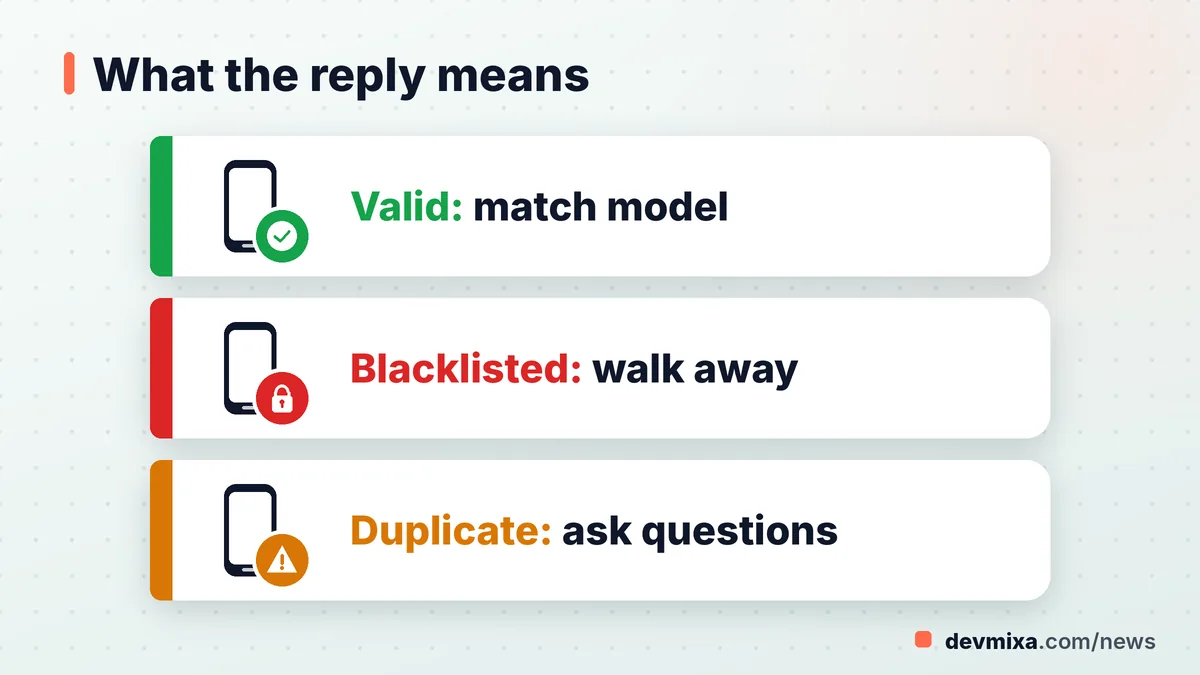
When you check IMEI on Sanchar Saathi, the KYM reply usually falls into one of three buckets, and each calls for a different decision. The exact wording on screen can change, so read the full message rather than one word.
A valid result
A valid or genuine result means the IMEI is recognised and not flagged. Now match the brand and model in the reply with the phone itself.
The IMEI blacklisted meaning on Sanchar Saathi
The meaning is blunt: someone has reported this handset lost or stolen, or the authorities have blocked it, and it is listed in the Central Equipment Identity Register. A blacklisted phone should not work on Indian networks. Do not buy it.
The IMEI duplicate or already in use result meaning
This result is less dramatic but still serious. It suggests the same number is active on more than one device. That can point to a cloned IMEI on a counterfeit or tampered handset. A duplicate IMEI does not prove the phone in front of you is the fake, but it does mean the record is muddy, and a muddy record is a poor foundation for a purchase.
How to check second hand phone is stolen on OLX, Cashify and the local market
The method is the same on every platform: check IMEI on Sanchar Saathi for every number on the device yourself, in front of the seller, before you pay. Do not accept a screenshot of a result, because screenshots are easy to edit and may belong to a different phone.
On OLX and other classified sites you deal with a private individual, so you carry all the checking. Ask the seller to dial *#06# while you watch, and send both numbers to 14422 from your own phone. On a dual SIM phone, a clean first IMEI and a flagged second IMEI is still a flagged phone.
Cashify and other organised resale or refurbished phone sellers usually inspect devices, issue a bill and offer a short warranty, which shifts part of the risk to a business you can contact later. That is generally safer than an anonymous deal, though the guidance is the same: run your own check on delivery and keep the invoice. Under the 2025 amendments to the Telecom Cyber Security Rules, businesses that buy and sell used phones are also required to check IMEIs against a central database of restricted devices before resale, so an organised seller should already have done this homework.
Imagine Ritesh, a Bhopal student eyeing a half-price phone at a weekly market. Two free SMS messages, one per IMEI, would tell him more than the seller's whole pitch.
Buying used phone without bill: legal risk in India and the IMEI law
The buying used phone without bill legal risk India buyers face is real but manageable: the main danger is that you end up holding stolen property, and the law on tampered IMEIs is strict. A missing bill is not a crime in itself. The trouble starts when the phone turns out to be stolen and you cannot show where it came from.
If police trace a blacklisted handset to you, you may be asked to hand it over and explain the purchase. Indian criminal law treats dishonestly receiving stolen property as an offence, and while an innocent buyer is in a very different position from a thief, a seller's name, phone number and a written receipt make your good faith much easier to show.
The IMEI itself is protected by the Telecommunications Act, 2023. According to the DoT advisory reported by FoneArena in November 2025, changing an IMEI or knowingly using a device with a tampered IMEI can attract up to three years in prison, a fine of up to ₹50 lakh, or both, under Section 42. The amendment rules notified on 22 October 2025 add duties for used-phone dealers, and DoT has said they are in force.
This is general information, not legal advice. For a specific dispute, confirm the latest text on the official DoT and Sanchar Saathi pages or speak to a lawyer.
How to block lost phone IMEI on CEIR portal, and unblock it later
Start with two things: a police complaint and a working SIM for your old number. The Central Equipment Identity Register, or CEIR, is the system that blocks a lost phone or stolen phone across all Indian networks, and it now sits under Sanchar Saathi at ceir.sancharsaathi.gov.in, with the older ceir.gov.in address redirecting there.
According to the CEIR user manual, you first get a replacement SIM from your operator, because the OTP goes to that number. Then file a police complaint (an FIR or a lost report) and keep the FIR copy or complaint number handy. On the portal, choose the option to block a stolen or lost mobile, enter the device and IMEI details, the complaint details and your identity proof, then verify the OTP. A purchase invoice is optional but helps. The system gives you an 18-digit request ID; guard it like a cheque book, because you need it later.
How to unblock IMEI after recovering phone
Choose the unblock option, enter the request ID, your mobile number and a reason, then confirm with an OTP. The unblock request goes to the operators, and the phone works again once they process it.

The Sanchar Saathi app mandate that never was, plus Chakshu and TAFCOP
The Sanchar Saathi app is not mandatory on new phones. On 28 November 2025 DoT directed smartphone makers to pre-install it, but after privacy concerns and political pushback the government withdrew that requirement on 3 December 2025, citing a sharp rise in voluntary downloads. Installing the app is your choice.
The portal itself is more than an IMEI lookup. It works like a small toolbox, and each tool fixes a different leak.
- Chakshu lets you report suspected fraud calls, SMS or WhatsApp messages.
- TAFCOP, or Know Mobile Connections in Your Name, shows every number registered against your identity so you can flag ones you never took.
- Block your lost or stolen handset is the CEIR service covered above.
- Report international calls with an Indian number helps catch calls that show a +91 caller ID but come from abroad.
The scale is large. When we checked on 4 November 2026, the Sanchar Saathi home page showed about 63.12 lakh mobiles blocked and 39.03 lakh traced, and more than 2.6 crore app downloads on Google Play. The counters change daily. Our gadgets news section tracks further changes.
A ten-minute checklist before you pay for a second-hand phone
The documents to take when buying second hand phone are few but they protect you: a bill or written receipt, the original box, and a copy of the seller's ID. Use this order and the whole check takes about ten minutes.
- Ask the seller to dial *#06# while you watch, and note every IMEI shown.
- Check IMEI on Sanchar Saathi by sending KYM and each number to 14422 from your own phone, or use the app.
- Match the brand and model in the reply with the handset in your hand.
- Compare the numbers with the box IMEI sticker and the purchase invoice, digit by digit.
- Make sure the phone is signed out of Google or Apple accounts and has been factory reset in front of you.
- Take a photo of the seller's ID and note their mobile number.
- Get a simple signed note with date, price, model, IMEIs and both names if there is no bill.
- Pay by UPI or bank transfer rather than cash, so there is a record of the deal.
If any step fails, pause the deal and check IMEI on Sanchar Saathi again later. A good phone will still be a good phone tomorrow; a stolen one only gets more expensive the longer you hold it.
Frequently asked questions
Is the KYM IMEI check free?
Yes. The KYM check on the Sanchar Saathi website and app costs nothing. The SMS to 14422 is treated as a normal message, so your operator's standard SMS rules apply, and most prepaid and postpaid plans include free messages. There is no separate fee charged by the Department of Telecommunications for the lookup itself.
Can I verify an IMEI without holding the phone?
Yes, if the seller shares the number, you can run KYM from anywhere. Ask for a clear photo of the *#06# screen and the box sticker. Still repeat the check in person before paying, because a seller could send you the IMEI of a different, clean phone.
Will a blacklisted phone work on Jio or Airtel?
It should not. A CEIR block is shared with all Indian mobile operators, including Jio, Airtel, Vi and BSNL, so a blacklisted handset is meant to be refused on every network. It may still work on Wi-Fi, which is how some sellers make a flagged phone look normal during a quick demo.
How quickly does a CEIR block start working?
The CEIR manual does not publish a fixed time. After you submit the request with OTP, it is passed to the operators, who apply the block on their networks. Users often report it taking effect within a day or so. You can track progress with your request ID on the status page.
Can a seller change the IMEI number on a phone?
Technically, criminals sometimes do, but it is illegal. Under the Telecommunications Act, 2023, tampering with an IMEI or knowingly using a tampered device can lead to up to three years in jail, a fine of up to ₹50 lakh, or both. A changed IMEI is a strong reason to refuse the phone.
Does KYM work for iPhones?
Yes. KYM works with the IMEI, which every iPhone sold with cellular radio has. Find it by dialling *#06# or opening Settings, General, About. The Sanchar Saathi app is also available on the App Store, so iPhone users can run the check without using SMS at all.
Can I check the IMEI of an imported phone?
You can try, and the same steps apply. Phones bought abroad may show limited details or be missing from Indian records, which does not always mean they are stolen. Ask for the foreign bill and box, compare the model, and treat an unclear result with extra caution before paying full price.
Do I need an FIR to block a stolen phone?
You need a police complaint. The CEIR form asks for the complaint or FIR details along with identity proof and an OTP on your number. Many states let you file an online lost report for a missing phone, which is usually enough. Check your state police portal for the right option.
Is ceir.gov.in the same as Sanchar Saathi?
They are part of the same system now. CEIR is the register that blocks lost and stolen phones, and its pages have moved under Sanchar Saathi at ceir.sancharsaathi.gov.in. The old ceir.gov.in address redirects there, so bookmarks still land on the official DoT service.
What should I do if the phone I bought shows blacklisted?
Stop using it and contact the seller with your receipt and their details. If they will not help, approach the local police and explain how you bought it. Do not try to change the IMEI or get it reflashed at a repair shop, as that can turn a bad deal into a legal problem.
Planning a website, web app or SEO upgrade?
Tell us what you need. We reply within one working day with a clear plan and price.